
The ISUOG Basic Training Online Program introduces essential topics on ultrasound in obstetrics and gynecology. On completion, you will have the knowledge needed to perform an unsupervised ultrasound scan, and the confidence to recognise when a patient needs to be referred.
Overview
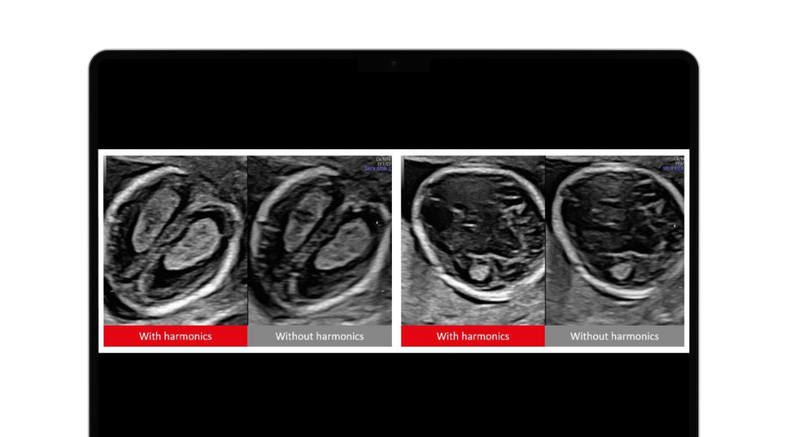

Basic Training Introduction Video
This video gives an introduction to the program and walk though of its features.
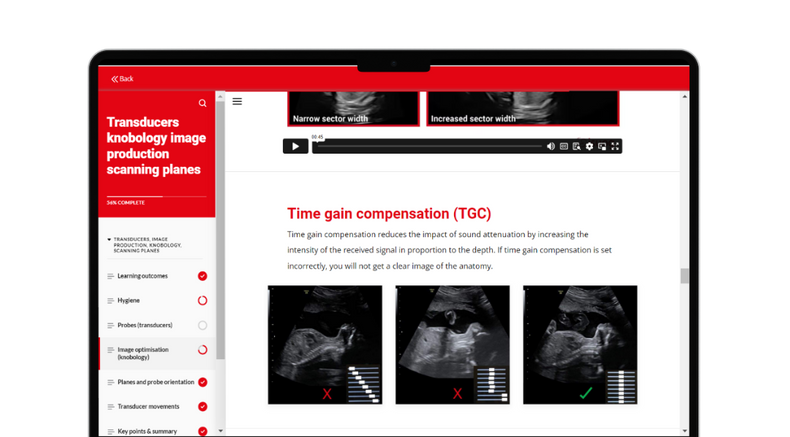
Self- paced study
Preview of the transducers knobology image production scanning planes
Interactive platform
Real examples of fetal brain ultrasound image optimisation and scanning techniques
Learning objectives:
-
Understand the fundamentals of ultrasound including the physics, scanning techniques and safety considerations.
-
Know how to perform first-trimester scans, assess fetal development, and write reports.
-
Conduct mid-trimester scans using a "6-step approach" to evaluate fetal growth, anatomy, and blood flow.
-
Develop skills to examine fetal anatomy using the "20 + 2 Planes Approach" and identify potential abnormalities.
-
Gain proficiency in gynecological ultrasound procedures, including examining the uterus, ovaries, and adnexae, and interpreting findings.
Earn CME credit for your professional development.
Shareable certificate for your Linkedin profile, CV or performance review.
Whats Included:
- 12 months access
- 30 CME credit
- ISUOG Certificate of Completion and Achievement
- 30 fully interactive online modules
Reviews:
Program Details
Full syllabus
-
Physical principles of ultrasound including safety
-
Transducers knobology image production scanning planes
-
The principles of Doppler ultrasound Quality control processes for operators & programmes
-
Informed consent image recording & report writing
-
Assessing normal and abnormal findings between 4-10 weeks in singleton & twin pregnancies
-
Assessing the normal pregnancy between 10-14 weeks
-
Cervical assessment
-
The 6-step approach
-
Fetal biometry – dating, assessing size & estimating fetal weight
-
Assessing the placenta & amniotic fluid
-
Distinguishing between normal & abnormal fetal size and growth
-
Umbilical and uterine artery Doppler studies
-
The 20 + 2 Planes Approach to the routine mid trimester scan
-
Distinguishing between normal and abnormal appearances of the fetal anatomy
-
Evaluating fetal anatomy from longitudinal sections
-
Distinguishing between normal & abnormal appearances of the skull & brain
-
Assessing the neck and chest
-
Obtaining & interpreting heart views
-
Examining the abdomen and anterior abdominal walls
-
Distinguishing between normal & abnormal appearances of the urinary tract
-
Distinguishing between normal & abnormal appearances of the long bones & extremities
-
Examining the upper lip face & profile correctly
-
Making a decision normal or not
-
The basics of a gynecological ultrasound
-
Examining the uterus - cervix & endometrium
-
Examining the uterus – myometrium
-
Examining the ovaries & adnexae
-
Typical ultrasound appearances of the most common pathologies of the adnexae
-
Writing the gynecological ultrasound report
Program Fees
View program fee for members and non members
Program fees for ISUOG members
|
ISUOG member |
£330 |
|
ISUOG member - with trainee/sonographer discount |
£240 |
|
ISUOG member in middle-income setting |
£100 |
|
ISUOG member in lower-resource setting |
£5 |
Program fees for non-members
|
Non-member price |
£360 |
|
Non-member - with trainee/sonographer discount |
£260 |
|
Non-member in middle-income setting |
£115 |
|
Non-member in lower-resource setting |
£10 |
Join as an ISUOG member for discounted prices to our online training, courses, events and access to member benefits such as our online networking platform.

Why Study on the ISUOG Academy
Technical Requirements: You will need a phone, tablet or laptop and stable internet connection.
Recommended experience level: No prior ultrasound experience is necessary.
Not an ISUOG Member? Find out more here
If you are not an ISUOG member but have subscribed to the ISUOG newsletter and have a log in for our website, you can go to the academy to purchase this course here. Enroll for this course as a subscriber.
If you are not a subscriber, please subscribe to the ISUOG newsletter first and return to enrol via the 'enroll for this program as a subscriber' link above.
Additional information
Acceditation and CME Credits
CME credits
The European Accreditation Council (EACCME) accredits this online course for Continuing Medical Education (CME). 30 European CME credits (ECMEC®) will be awarded on successful completion of this course. Through an agreement between the European Union of Medical Specialists (UEMS) and the American Medical Association (AMA), physicians may convert EACCME credits to an equivalent number of AMA PRA Category 1 CreditsTM. Information on the process to convert EACCME credit to AMA credit can be found at www.ama-assn.org/go/internationalcme.
CME Subcommittee
The CME Subcommittee oversees the CME requirements for our CME accredited courses.
Conflict of Interest
No commercial support has been accepted related to the development or publication of this course. This course underwent peer review in line with the standards of editorial integrity and publication ethics maintained by the International Society of Ultrasound in Obstetrics & Gynecology (ISUOG). Conflicts of interest have been identified and resolved in accordance with EACCME guidelines
Recommended browsers
You will need an update to date version of one of these browswers for the best experience.
-
MS Internet Explorer 11 (Not including compatibility modes)
-
MS Edge
-
Mozilla Firefox version 60 Extended Support Release (ESR)
-
Google Chrome 73
-
Safari 10 auf OS X
-
Mobile Browser Android >4 and iOS > 9
-
Current versions of Adobe Reader plugin
Program creators
This online program has been developed by an international group of leading clinicians practicing in the field. The ISUOG Basic Training program was developed by, and is maintained by the Basic Training Subcommittee. A list of all the volunteers who have offered their time and commitment to developing the Basic Training syllabus over the years is found in the introduction to this online course, and also on our website.